

TL;DR

Get workout gear delivered free with Prime
- Fast, free delivery on millions of items
- Prime Video, Amazon Music and more included
- Member-only deals all year
A MedPage Today opinion article by physician Hamayle Saeed describes being screened for diabetes at a BMI of 23 under guidance for Asian Americans but denied GLP-1 treatment at a BMI of 26.5 because she did not meet the usual coverage thresholds. The piece argues that clinical guidance, drug labels and insurance rules apply different definitions of obesity; the coverage implications and how insurers interpret updated labels remain unclear.
A South Asian physician says she was screened for diabetes once her body mass index passed 23, but was denied a GLP-1 drug at a BMI of 26.5 because she did not meet the usual eligibility criteria. In an October 31 opinion article for MedPage Today, Hamayle Saeed argues that the gap reflects a mismatch between Asian-specific clinical guidance and the thresholds insurers use for weight-loss drug coverage.
Saeed writes that her doctor began diabetes screening in line with American Diabetes Association guidance for Asian Americans, who can face diabetes risk at lower BMI levels. She says she has no diabetes and that her BMI of 26.5 fell short of the commonly applied criteria for weight-loss treatment: a BMI of 30 or higher, or 27 or higher with a weight-related condition. Her account is a personal report; the article does not identify the insurer or provide its denial letter.
The opinion article describes the disagreement as one between screening and treatment systems that interpret BMI differently. Saeed says the ADA’s 2026 Standards of Care advise clinicians to use ethnicity-appropriate measures when assessing excess body fat, while prior authorization forms may continue to apply the conventional BMI cutoffs. She also cites updated US labels for semaglutide and tirzepatide that describe their relevant indications using terms such as obesity and overweight with a weight-related condition, without stating a BMI number in the indication itself.
As supporting evidence, Saeed points to a 2025 study of semaglutide 2.4 mg in South Korea and Thailand. The trial enrolled participants using a local obesity definition of BMI 25 or higher. In a post hoc analysis of 68 participants who began below BMI 30, the 45 taking semaglutide lost an average of 17.6% of body weight, compared with 4.4% among 23 placebo recipients. The figures describe that study group; they do not establish that every person below BMI 30 is eligible for treatment or coverage.
Where Screening and Coverage Diverge
The mismatch can matter for patients whose diabetes risk is elevated at BMI levels that do not meet standard drug-coverage rules. Saeed argues that when insurers require a higher BMI, Asian patients may be screened earlier for diabetes yet still have to wait for medication access until they develop a qualifying condition or reach a higher weight threshold. That is the author’s account of the policy gap, not a finding that all plans deny treatment to all Asian patients below BMI 30.
Coverage policy also affects whether a clinician’s assessment can lead to treatment. Saeed reports that Medi-Cal ended coverage of GLP-1 drugs for weight loss in January and MassHealth followed in July, both in 2026. She argues that people near eligibility cutoffs are especially exposed when benefits contract. The article does not provide plan documents or a full account of exceptions, so readers should not treat those examples as a complete description of either program’s coverage rules.
The issue reaches beyond one patient’s request: it concerns how clinical evidence, drug labeling and insurance criteria are translated into access. A screening threshold indicates when clinicians should assess risk; by itself, it does not determine whether a drug is approved for an individual or covered by a particular plan.
Products Worth Considering

Withings BPM Connect Wi-Fi and Bluetooth Blood Pressure Monitor

Garmin Forerunner 570 GPS Running Smartwatch, 47mm, Aluminum, Black
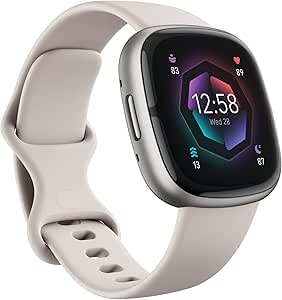
Fitbit Sense 2 Health and Fitness Smartwatch (Lunar White/Platinum)
As an affiliate, we earn on qualifying purchases.
How BMI Thresholds Entered the Debate
BMI is a measure based on height and weight, and does not directly measure body fat distribution. Saeed cites evidence that people of Asian descent may have more visceral fat and less muscle than people of European descent at the same BMI. She also references World Health Organization action points of 23 and 27.5 for Asian populations and a study of nearly 1.5 million adults in England that estimated a diabetes-risk equivalent for South Asian adults at a BMI of 23.9 compared with white adults at BMI 30. Those are findings and thresholds cited by the author, not individual diagnoses.
The article also cites a 2026 analysis of 352 GLP-1 trials. According to Saeed, using BMI 30 as a trial inclusion cutoff would have made 41.5% of non-Asian American adults eligible, compared with 13.5% of Asian Americans and 7.2% of Korean Americans. Trial participation criteria and insurer coverage rules are separate matters, but the author argues that trial design helped carry higher BMI thresholds into drug labels and payer forms.
Saeed contrasts US coverage practices with guidance from the UK’s National Institute for Health and Care Excellence. She says NICE recommends lowering its BMI threshold by 2.5 units for several ethnic groups, including South Asian and Chinese patients, when considering tirzepatide. The comparison shows that eligibility policies vary by health system; it does not mean the UK and US use the same reimbursement rules.
“The ADA guideline that flags me for annual diabetes screening and the prior authorization form that denies me the drug are describing the same 26.5. Only one of them was written with an Asian body in mind.”
— Hamayle Saeed, MD, in a MedPage Today opinion article
What Insurers Will Accept
The article does not name the insurer that denied Saeed’s request, provide the denial language, or establish whether an appeal was filed. It is also unclear how individual plans interpret the 2026 label language or whether they will change prior authorization requirements in response to updated ADA guidance. The cited clinical studies do not, on their own, settle which patients should receive a GLP-1 drug or what public and private plans should cover.
Coverage varies by plan and by the drug’s use. The source discusses weight-loss coverage and cites standard BMI thresholds, but does not provide a comprehensive review of current rules, exceptions, or coverage for diabetes and other approved indications. The status of any proposed policy changes is not reported.
Appeals and Policy Decisions Ahead
The next steps for Saeed’s individual case are not stated in the article. For patients facing similar denials, the relevant process will depend on their plan’s criteria, the medication’s indication and any available appeal route. The article does not offer case-specific medical or insurance advice.
At the policy level, the questions are whether insurers will revise their forms to reflect updated drug labels and ethnicity-specific clinical guidance, and whether further evidence will inform coverage decisions for patients below BMI 30. No insurer response or scheduled policy review is included in the source report. The central issue remains whether coverage rules will account for the differences between population-level risk thresholds and the criteria used to authorize treatment.
Key Questions
Why was the physician screened at a BMI of 23?
She says her doctor followed diabetes-screening guidance for Asian Americans, who can face diabetes risk at lower BMI levels. A screening threshold is not the same as a drug-coverage threshold.
Why did a BMI of 26.5 not meet the usual GLP-1 criteria described?
Saeed says the criteria applied to her request required a BMI of 30 or higher, or 27 or higher with a weight-related condition. She reported having neither diabetes nor a qualifying condition; the article does not name her insurer or document its specific rules.
Does the STEP 11 study prove GLP-1 drugs should be covered below BMI 30?
No. The study and its post hoc analysis reported weight-loss results among trial participants in South Korea and Thailand. Those findings may inform research and policy discussions, but they do not by themselves determine individual treatment decisions or insurance coverage.
Have US insurers changed their BMI requirements?
The source article does not document broad insurer changes. Saeed says updated drug labels no longer state a numeric BMI in the indication, while prior authorization forms may still use thresholds of 30 or 27 with a related condition. Requirements can vary by plan.
Source: medpagetoday.com