To create a balanced home workout plan, combine strength exercises like push-ups and resistance band moves with cardio activities such as jumping rope or brisk walking. Schedule rest days to allow your muscles to recover and prevent burnout. Vary your routines to target different muscle groups and keep motivation high. Focus on proper form, warm-ups, and cool-downs for ideal results. Keep going, and you’ll discover how to blend these elements for lasting fitness success.
Key Takeaways
- Incorporate a variety of strength, cardio, flexibility, and rest days to ensure balanced muscle development and cardiovascular health.
- Schedule workout days targeting different muscle groups with rest or active recovery to prevent overtraining and promote recovery.
- Use household items or resistance bands to add challenge and versatility to strength exercises at home.
- Include interval and moderate-intensity cardio sessions, ensuring at least 150 minutes weekly for heart health and endurance.
- Prioritize rest, recovery, and proper nutrition to optimize performance, prevent injury, and support long-term progress.
Understanding the Components of a Well-Rounded Workout

To create an effective home workout plan, it’s essential to understand the key components that make it well-rounded. Incorporating stretching routines helps improve flexibility and reduce injury risk, so include gentle stretches before and after your workouts. Proper nutrition timing also plays a critical role; eating the right nutrients before exercise fuels your body, while post-workout meals aid recovery. These elements keep your body prepared and help you perform better. Remember, a balanced plan isn’t just about exercise; it includes warm-ups, cool-downs, and rest periods, which are crucial for recovery. Creating a balanced routine can help you stay consistent and prevent burnout. Additionally, paying attention to energy-efficient solutions supports sustainable fitness practices and minimizes environmental impact. Implementing color accuracy in your workout environment, such as proper lighting and visual cues, can also enhance focus and motivation. By paying attention to stretching routines and nutrition timing, you ensure your workouts are safe, effective, and sustainable, setting a strong foundation for reaching your fitness goals.
Assessing Your Fitness Goals and Setting Priorities

To create an effective workout plan, you need to clearly define your fitness goals. Think about what you want to achieve—whether it’s strength, endurance, or flexibility—and prioritize these components accordingly. This focus will help you design a balanced routine that aligns with your personal objectives. Incorporating Free Floating techniques can also enhance your overall workout efficiency by allowing greater flexibility in your exercise choices. Recognizing global reliance on cloud services can remind you of the importance of resilience and backup plans in both technology and personal fitness routines.
Define Your Fitness Objectives
Have you ever wondered why some workouts feel more effective than others? It all comes down to defining your fitness objectives. Clear goals help you stay motivated and guide your training plan. To set effective objectives, consider these steps:
- Identify whether you want to build strength, improve endurance, or enhance flexibility.
- Use nutrition guidance to support your specific goals.
- Set measurable targets, like running a certain distance or lifting a specific weight.
- Develop motivational strategies to keep you committed and focused.
- Recognize how electric bike capabilities and features can influence your overall fitness and outdoor activity choices.
Knowing what you want to achieve allows you to prioritize exercises and recovery. This clarity ensures your home workout plan remains balanced, purposeful, and adaptable to your evolving fitness journey.
Prioritize Workout Components
Understanding your fitness goals is essential for creating a balanced workout plan. Once you’ve identified your objectives, you can prioritize workout components like strength, cardio, and rest accordingly. For example, if building muscle is your focus, you’ll dedicate more time to strength training and ensure proper nutrition tips to fuel recovery. If improving endurance is your goal, cardio should take precedence. Your workout gear also plays a role—invest in comfortable shoes for cardio or quality weights for strength. Remember, balancing these components prevents burnout and injury, so set clear priorities based on your goals. Regularly reassess and adjust your plan to stay aligned with your progress. Prioritizing workout components allows you to maximize results while maintaining motivation and overall well-being.
Designing a Weekly Schedule for Balance and Variety
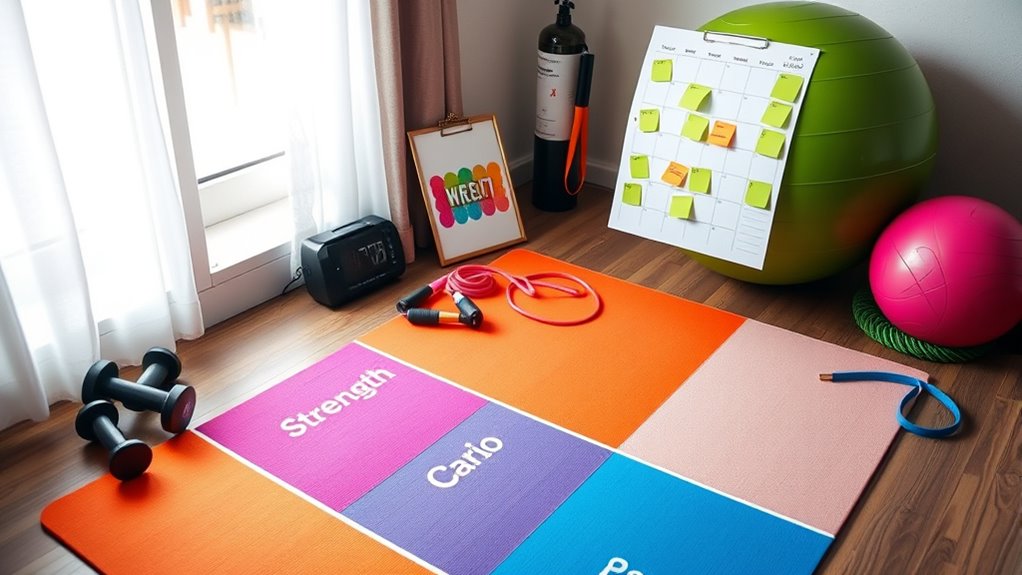
To create a balanced weekly workout plan, you should alternate workout days to target different muscle groups and prevent overtraining. Remember to include rest periods to allow your body to recover and avoid burnout. By mixing activity and rest, you’ll keep your routine engaging and sustainable.
Alternating Workout Days
Alternating workout days is an effective way to guarantee your fitness routine remains balanced and engaging. By switching between different types of workouts, you prevent overtraining and promote muscle isolation, allowing targeted muscles to recover. It also gives you the chance to incorporate flexibility routines, enhancing mobility and reducing injury risk. To design an effective schedule, consider these ideas:
- Assign strength training and muscle isolation exercises on one day
- Follow with cardio and flexibility routines on alternate days
- Include rest or active recovery days to support muscle repair and overall recovery. Incorporating proper scheduling can optimize your results and prevent burnout.
- Vary intensity levels to avoid plateau and maintain motivation
- Incorporate recovery and relaxation techniques such as stretching or aromatherapy to promote overall well-being. Understanding training balance helps you create a more effective and sustainable workout plan. Additionally, paying attention to your nutrition plan supports muscle growth and recovery, amplifying your efforts. Remember that listening to your body is crucial for adjusting your routine to prevent injury and ensure consistent progress. This approach keeps your routine dynamic, ensures proper recovery, and helps you achieve a well-rounded fitness program.
Incorporating Rest Periods
Incorporating rest periods into your weekly schedule is essential for preventing burnout and promoting muscle recovery. Without proper rest, you risk overtraining, which can lead to fatigue and injury. Schedule at least one full rest day each week, but also consider lighter rest day activities like stretching, yoga, or walking to stay active without overexerting. These activities help improve flexibility and circulation, supporting recovery. Listen to your body—if you feel unusually sore or fatigued, add extra rest or reduce workout intensity. Balancing workout days with adequate rest not only reduces overtraining risks but also keeps you motivated and consistent. Remember, rest is an active component of your fitness plan that enhances performance and long-term progress. Incorporating personalized recovery strategies in your fitness routine can also help optimize rest and recovery for better results. Additionally, understanding your body’s signals can guide you in adjusting your schedule to prevent overtraining and ensure sustainable progress. Recognizing the importance of proper sleep can further support your recovery efforts and overall well-being.
Incorporating Effective Strength Training Exercises

Effective strength training exercises are essential for building muscle, increasing metabolism, and enhancing overall fitness. Incorporating bodyweight exercises and resistance training into your routine helps you achieve these goals effectively at home. Focus on proper form and consistency to maximize results. Here are some key ideas:
- Bodyweight exercises – push-ups, squats, lunges, and planks build strength without equipment.
- Resistance training – use resistance bands or household items like water bottles to add challenge.
- Progression – gradually increase repetitions or resistance to prevent plateaus and promote continuous improvement.
- Targeted muscle groups – alternate between upper body, lower body, and core exercises for balanced development.
- Understanding physical traits can help tailor your workout to enhance specific areas of attractiveness and strength. Applying heat distribution principles can optimize the effectiveness of heat-based workout recovery methods, such as hot packs or saunas, to aid muscle relaxation and recovery. Additionally, integrating visual and auditory cues into your routine can improve technique and engagement during training. Incorporating feedback mechanisms like biofeedback techniques can further enhance your awareness and control during exercises, leading to better results.
Planning Cardio Sessions for Endurance and Heart Health

After strengthening your muscles with targeted exercises, adding cardio sessions can considerably improve your endurance and heart health. To maximize benefits, incorporate interval training into your routine. Alternating high-intensity bursts with recovery periods boosts cardiovascular capacity and burns more calories efficiently. Cross training is also effective, allowing you to switch between different activities like running, cycling, or jump rope. This variety prevents boredom and reduces the risk of overuse injuries. Aim for at least 150 minutes of moderate-intensity cardio weekly, adjusting intensity based on your fitness level. Consistent, well-planned sessions strengthen your heart and lungs, making daily activities easier. Remember to warm up beforehand and cool down afterward to prevent injury and promote recovery.
Ensuring Adequate Rest and Recovery for Optimal Progress

To see consistent progress in your home workout plan, you need to prioritize adequate rest and recovery. Rest helps prevent overtraining, which can lead to fatigue, decreased performance,, and injury. It also plays a crucial role in injury recovery, allowing your muscles and tissues to repair and strengthen. Incorporating adequate sleep is essential for maximizing your body’s natural healing processes and maintaining overall performance. To optimize your recovery, consider these key strategies:
- Schedule rest days between intense workouts
- Listen to your body’s signals for fatigue or pain
- Incorporate active recovery, like light stretching or walking
- Ensure proper sleep to support muscle repair and hormone balance
- Utilize recovery techniques such as foam rolling or contrast baths to enhance muscle healing
Frequently Asked Questions
How Can I Stay Motivated to Stick With My Workout Plan?
To stay motivated, focus on workout variety and keep things fresh, so you don’t get bored. Set clear, achievable goals to give yourself a sense of purpose and progress. Celebrate small victories along the way, and remember why you started. Scheduling regular workouts and tracking your progress can also boost your motivation, making it easier to stay committed to your plan.
What Are Signs of Overtraining or Burnout?
You might notice signs of overtraining or burnout like persistent muscle fatigue, which won’t go away after rest. You could also experience hormonal imbalance, leading to mood swings, sleep issues, or decreased motivation. If you’re feeling unusually exhausted, sore, or unmotivated despite taking rest days, it’s a sign you need to scale back. Listening to your body and adjusting your workout intensity helps prevent overtraining and keeps you healthy.
How Do I Modify Workouts for Injuries or Physical Limitations?
Your workout can be as flexible as a yoga master’s pose. To modify for injuries or limitations, focus on adaptive modifications and injury-safe exercises. Swap high-impact moves for low-impact alternatives, like walking instead of running, and use resistance bands instead of weights. Always listen to your body, consult a healthcare professional, and prioritize safety. This approach keeps you active without risking further harm, making your fitness journey sustainable and safe.
What Are Some Effective Ways to Track Progress?
You can track your progress effectively by keeping fitness journals where you log workouts, reps, and how you feel. Incorporate progress photos taken regularly to visually see changes over time. Use these tools consistently to stay motivated and identify areas needing improvement. Combining written records with photos gives you a holistic view of your fitness journey, helping you adjust your plan as you advance.
How Can I Balance Workout Intensity With Daily Energy Levels?
Your energy management is key; it can feel like juggling a thousand flaming torches! To balance workout intensity with daily energy levels, listen to your body and adjust your workout pacing accordingly. Start with moderate effort, then push harder when you feel energized. Incorporate rest days, hydrate well, and prioritize sleep. This way, you’ll maintain consistent progress without burning out, making each session both effective and sustainable.
Conclusion
By balancing strength, cardio, and rest, you set yourself up for success. Did you know that incorporating just two days of strength training weekly can reduce your risk of heart disease by 20%? Keep your workouts varied and listen to your body to stay motivated and avoid burnout. Stick to your plan, and you’ll see steady progress—making your fitness journey both effective and enjoyable.