
Electric vehicles work by using batteries to store electrical energy, which powers the electric motor that drives the wheels. When you press the accelerator, signals control the flow of electricity from the battery to the motor, delivering instant torque and smooth acceleration. Charging stations replenish the battery efficiently, with options like slow, fast, or rapid chargers. To discover more about how these components work together seamlessly, keep exploring the details below.
Key Takeaways
- Electric vehicles use batteries to store electrical energy that powers the motor.
- The electric motor converts stored energy into mechanical power to move the vehicle.
- Charging stations supply electricity to recharge the battery, with faster chargers reducing charging time.
- The vehicle’s controller manages power flow between the battery and motor for smooth operation.
- Regenerative braking captures energy during deceleration, feeding it back into the battery to extend range.
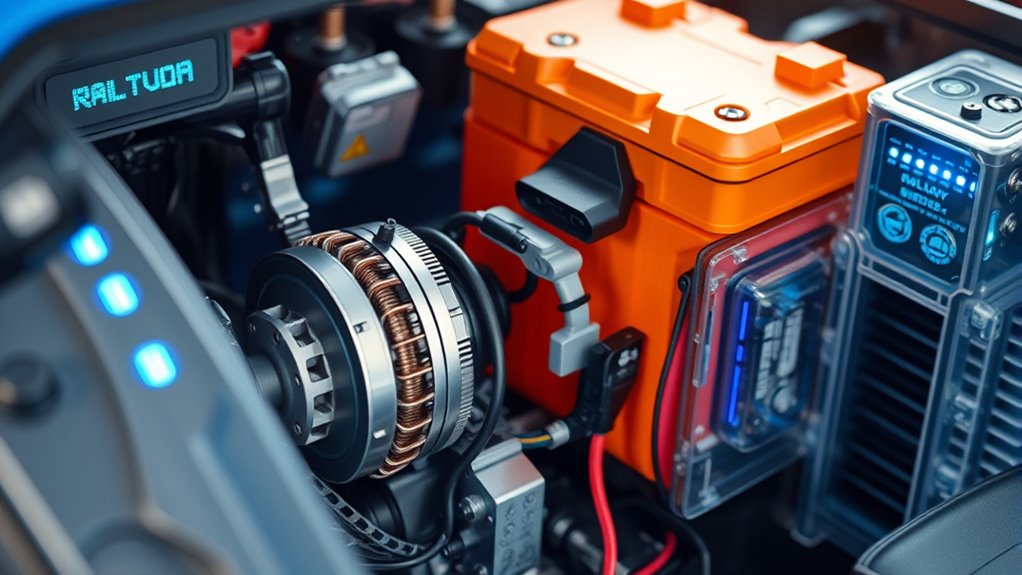
Have you ever wondered how electric cars work and why they’re becoming so popular? The answer lies in their innovative technology, especially the battery systems and the infrastructure supporting them. Unlike traditional gasoline vehicles, electric cars rely entirely on batteries to store and supply energy. These batteries are typically lithium-ion, which are lightweight, have high energy density, and can be recharged multiple times. The advancements in battery technology over recent years have markedly increased driving ranges, making EVs more practical for everyday use. As a result, you no longer need to worry about running out of power on long trips, which was a common concern in earlier models.
Charging stations play a vital role in making electric cars accessible and convenient. These stations are strategically placed in cities, along highways, and at workplaces to enable quick and easy recharging. When you plug in your EV at a charging station, electricity flows into the battery, restoring its energy. There are different types of chargers—Level 1, Level 2, and DC fast chargers—each offering varying speeds. Level 1 chargers are the slowest, often just an ordinary household outlet, providing a trickle charge. Level 2 chargers are faster and common at public charging points and home installations. DC fast chargers are the most rapid, capable of replenishing a significant portion of your battery in just 20 to 30 minutes, making long-distance travel much more feasible. Modern battery management systems ensure the longevity and safety of the batteries during charging and discharging cycles.
The core of an electric car is its electric motor, which converts the stored electrical energy into mechanical power to drive the wheels. This process is highly efficient, offering instant torque and smooth acceleration. When you press the accelerator, sensors send signals to the controller, which manages the flow of electricity from the battery to the motor. Regenerative braking further enhances efficiency by capturing energy during deceleration and feeding it back into the battery. This means your EV recovers some energy that would otherwise be lost, extending your driving range.

Tesla Universal Wall Connector – Electric Vehicle (EV) Charger with Dual Plug Type – Compatible for All North American EVs – Level 2 – up to 48A with 24' Cable
UNIVERSAL COMPATIBILITY: Seamlessly transitions between NACS and J1772 connectors, accommodating all major North American EVs including Tesla Vehicles
As an affiliate, we earn on qualifying purchases.
As an affiliate, we earn on qualifying purchases.
Frequently Asked Questions
How Do EV Batteries Withstand Extreme Temperatures?
You might wonder how EV batteries handle extreme temperatures. They use advanced thermal management systems and battery cooling to maintain ideal temperature ranges. These systems actively monitor and regulate heat, preventing overheating in hot weather and freezing in cold conditions. By efficiently managing thermal fluctuations, they help preserve battery performance, extend lifespan, and guarantee safe operation, no matter how extreme the outside temperature gets.
What Is the Lifespan of an Electric Car’s Battery?
Imagine a battery aging like a fine wine—lasting longer with proper care. Your EV’s battery typically endures 8 to 15 years, depending on usage and climate. Battery degradation gradually reduces capacity, but advanced thermal management keeps temperatures steady, prolonging life. Regular charging habits and avoiding extreme temperatures help maximize battery lifespan, ensuring your electric vehicle stays reliable and efficient for years to come.
How Do Regenerative Braking Systems Work in EVS?
Regenerative braking in EVs works by converting kinetic energy into electrical energy during braking. When you press the brake pedal, the system engages, slowing the vehicle while simultaneously capturing energy that would otherwise be lost as heat. This energy recovery process redirects electricity back into the battery, helping extend your driving range and improve efficiency. So, every time you brake, you’re actively aiding the battery’s energy cycle.
Are EV Motors More Efficient Than Traditional Engines?
You’ll find that EV motors are more efficient than traditional engines, with some reaching over 90% motor efficiency. This is largely thanks to advances in battery technology and streamlined design. Unlike internal combustion engines that waste energy as heat, electric motors convert more energy directly into motion. So, by choosing an EV, you’re opting for a vehicle that uses energy more effectively, reducing waste and maximizing performance.
How Do Charging Times Vary With Different Charger Types?
Charging times vary depending on the charger type and the charging infrastructure. With fast charging stations, you can typically get an 80% charge in about 30 minutes, making long trips more feasible. Level 2 chargers take longer, around 4-10 hours, but are common at home and public places. The availability and quality of charging infrastructure directly impact how quickly you can recharge your EV, so expanding this network benefits your convenience.

12V Charger for Kids Ride On Car Toys, 12 Volt Battery Charger for Best Choice Products Wrangler SUV Universal Charger Supplies for Trax Dynacraft Jeep ATV Quad Disney Electric Ride-On Charger
【Compatible Models】12 Volt Battery Charger Compatible for Ride on Toys Compatible with Wrangler, Kid Jeeps car, Motorcycle, Dynacraft,…
As an affiliate, we earn on qualifying purchases.
As an affiliate, we earn on qualifying purchases.
Conclusion
Now that you understand how electric cars work, it’s clear they’re more than just eco-friendly rides—they’re engineering marvels. Some believe EVs rely solely on batteries, but in reality, advanced motor systems and regenerative braking play vital roles in efficiency. As technology evolves, EVs will only become smarter and more reliable. So, next time you hit the road in an EV, remember you’re experiencing a sophisticated blend of innovation and sustainability working seamlessly under the hood.

Battery Management Systems for Large Lithium Ion Battery Packs
As an affiliate, we earn on qualifying purchases.
As an affiliate, we earn on qualifying purchases.
Regenerative Braking System for Electric Vehicles: Core of Vehicle
As an affiliate, we earn on qualifying purchases.
As an affiliate, we earn on qualifying purchases.