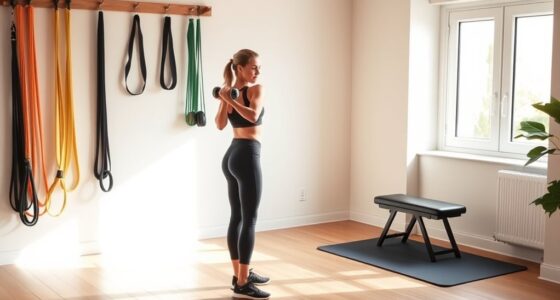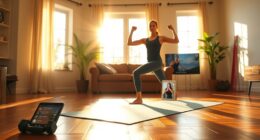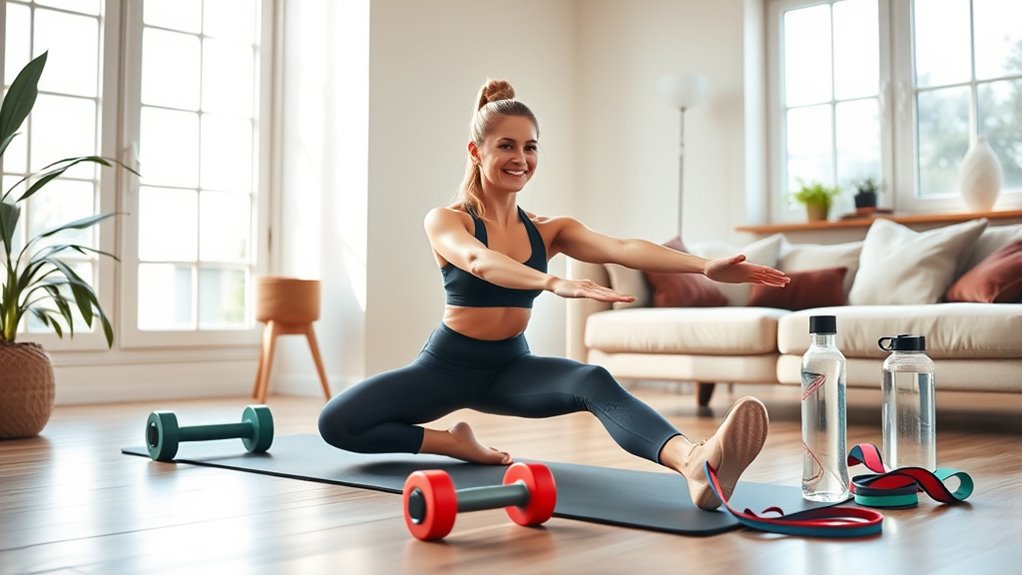

Start by clearing a flat, well-lit space and gather essentials like a mat and water. Begin with a 5-10 minute warm-up using dynamic stretches and controlled breathing. Proceed to simple core exercises such as planks, bicycle crunches, and leg raises, modifying them for comfort. Finish with gentle stretching to relax muscles. Stay motivated by setting goals and tracking progress. Keep going, and you’ll discover more effective routines to build strength and confidence at home.
Key Takeaways
- Choose a flat, clutter-free space with good lighting and ventilation for safety and comfort.
- Start with a 5-10 minute warm-up using dynamic stretches and controlled movements.
- Perform simple core exercises like planks, bicycle crunches, and leg raises, modifying as needed for comfort.
- Cool down with slow breathing and gentle stretches targeting worked muscles, holding each for 15-30 seconds.
- Stay motivated by setting clear goals, tracking progress, and incorporating variety to keep workouts engaging.
Preparing Your Space and Equipment

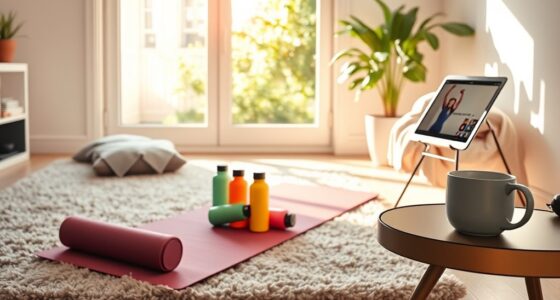
Before you start your workout, it’s important to set up a safe and comfortable space. Find a flat area free of clutter where you can lay down your exercise mats. These mats protect your joints and provide stability during your routines. Keep your water bottles nearby to stay hydrated throughout your workout. Make sure your water bottles are easily accessible so you don’t have to break your flow to grab a drink. Clear the space of any objects that could cause injury or distraction. If possible, choose a well-ventilated area with good lighting. Setting up your space properly helps you stay focused, prevents accidents, and makes your workout more enjoyable and effective. Additionally, creating a dedicated workout area can help you establish a routine and maintain motivation over time. Incorporating proper space organization can further enhance your workout environment and safety. Paying attention to visual and auditory cues can also improve your focus and overall workout quality. Using smart fitness technology like connected equipment or wearable devices can further optimize your workout environment for better results. Being mindful of ambient noise levels can help you stay concentrated and improve your workout experience.
Warm-Up Exercises to Get Started

Starting your workout with warm-up exercises helps prepare your muscles and joints for more intense activity. Focus on dynamic stretching to increase blood flow and loosen tight muscles. Movements like arm circles, leg swings, and torso twists activate your entire body and reduce injury risk. Remember to practice proper breathing throughout—inhale deeply through your nose and exhale steadily—to enhance oxygen flow and maintain energy levels. Keep your movements controlled and avoid bouncing or jerking, which can strain muscles. Warm-ups should last about 5-10 minutes, gradually raising your heart rate and loosening your muscles. Incorporating electric bike performance principles, such as gradual intensity increase, can optimize your warm-up routine. By incorporating dynamic stretching and mindful breathing, you set a strong foundation for the workout ahead, helping you perform exercises more effectively and safely. Additionally, understanding the importance of dreams and subconscious signals can help you stay motivated and aware of your body’s responses during exercise. Recognizing visual cues can also improve your focus and technique during your routine.
Core Workout Routine for Beginners

Are you ready to strengthen your core and improve overall stability? A solid core forms the foundation for all movement, so start with simple exercises. Here are some effective options:
Build a strong core with simple, effective exercises to enhance stability and movement foundation.
- Plank variations—modify by dropping to your knees if needed.
- Bicycle crunches—use a chair as equipment alternative for added support.
- Leg raises—perform on a mat or use a towel under your lower back.
- Russian twists—use a water bottle or small weight if you lack equipment. Incorporating support breakfast options like high-protein meals can help fuel your workouts and aid recovery. Prioritizing cultural insights can also motivate you by connecting your fitness journey to broader wellness trends. Additionally, understanding modern kitchen technology can inspire you to prepare nutritious meals more efficiently at home. Remember that Youngster Choice highlights the importance of personal branding and financial independence, which can teach you the value of consistency and dedication in achieving your fitness goals.
For exercise modifications, focus on form and comfort, gradually increasing intensity. Equipment alternatives ensure you can perform these moves at home without special gear. Keep your core engaged, breathe steadily, and stay consistent to see steady progress. Incorporating easy homemade flautas into your post-workout meal can aid in recovery and provide delicious nourishment.
Cool-Down and Stretching

After completing your core workout, it’s important to wind down with some cool-down and stretching exercises. These help lower your heart rate and promote muscle relaxation. Focus on slow, controlled breathing techniques to help your body relax further and reduce tension. Stretching should target the muscles you worked, holding each stretch for 15-30 seconds without bouncing. Breathe deeply as you stretch, ensuring your muscles stay relaxed. This process not only helps prevent soreness but also improves flexibility over time. Remember, the goal is to ease your body back into a resting state, so avoid rushing through stretches. Incorporating breathing techniques during cool-down ensures you finish your workout feeling refreshed and relaxed, ready for recovery. Additionally, gentle post-workout maintenance can aid in reducing muscle stiffness and enhance overall recovery. Incorporating techniques like proper recovery strategies can further optimize your muscle healing process. Using mindful recovery techniques can also help you stay consistent with your fitness routine and prevent injury. Engaging in active recovery activities can further support your muscles and improve overall flexibility and strength. Incorporating mindfulness practices during cool-down can enhance your mental relaxation and overall well-being.
Tips for Staying Motivated and Consistent

Maintaining motivation and consistency can be challenging, but setting clear, achievable goals helps keep you focused and committed. To boost your efforts, try these motivational strategies:
- Break your workout into small, manageable tasks to build momentum and foster habit formation.
- Track your progress to see how far you’ve come, which encourages continued effort.
- Reward yourself for meeting milestones, reinforcing positive behavior and motivation.
- Find an accountability partner or join online communities for support and encouragement.
- Exploring local dining experiences can provide a well-deserved break and boost your overall motivation.
- Applying topical authority by consistently updating your fitness knowledge can enhance your confidence and dedication. Additionally, staying informed about Free Floating concepts in backyard design can inspire fresh ideas to keep your routine exciting.
- Incorporating creative practices such as experimenting with new workout routines can keep your exercises engaging and prevent boredom.
Frequently Asked Questions
How Often Should Beginners Update Their Workout Routines?
You should update your workout routine every 4 to 6 weeks. This keeps you motivated and prevents plateaus. Regular progress tracking helps you see improvements and identify when it’s time for changes. Incorporate workout variety to challenge different muscle groups and avoid boredom. Listening to your body is key—if you feel stalled or unmotivated, it’s a good sign you need a fresh routine to continue your fitness journey.
What Are Common Injuries to Watch Out for During Home Workouts?
Oh, the irony of avoiding injuries while rushing through your workout! Watch out for common injuries like strains, sprains, or pulled muscles, all easily preventable with injury prevention techniques. Focus on maintaining proper form, warming up, and listening to your body. Skipping these steps might seem harmless, but it risks unnecessary setbacks. Stay mindful, stay safe, and you’ll keep your workouts fun and injury-free.
How Can I Modify Exercises for Limited Space or Equipment?
To modify exercises for limited space or equipment, focus on space-saving exercises like bodyweight squats, lunges, and push-ups that require minimal room. Use equipment alternatives such as resistance bands instead of dumbbells or a chair for step-ups. You can also perform seated or lying exercises to save space. Adjust the intensity by reducing repetitions or modifying movements, ensuring you stay safe while getting an effective workout in tight areas.
What Should I Do if I Experience Pain During a Workout?
Feeling pain during a workout is like signaling a red flag—don’t ignore it. Stop exercising immediately and assess the pain’s intensity. To prevent injury and manage discomfort, focus on proper form, stay hydrated, and listen to your body. If pain persists, consult a healthcare professional. Remember, injury prevention is key, so never push through sharp or persistent pain; prioritize your safety first.
Are There Specific Diets That Complement a Beginner Workout Routine?
You should focus on simple diet plans that fuel your workouts and aid recovery. Incorporate nutritional tips like eating lean proteins, whole grains, fruits, and vegetables. Stay hydrated and avoid processed foods or sugary drinks. A balanced diet supports your progress and keeps your energy levels steady. Remember, consistency is key, so choose a plan you can maintain, and listen to your body’s needs for ideal results.
Conclusion
Starting a home workout routine can boost your health and confidence. Did you know that just 150 minutes of moderate exercise weekly reduces heart disease risk by 14%? By preparing your space, warming up, sticking to your routine, and cooling down, you’ll build habits that last. Stay motivated, be consistent, and celebrate small wins along the way. Your commitment today sets the foundation for a healthier, stronger tomorrow.