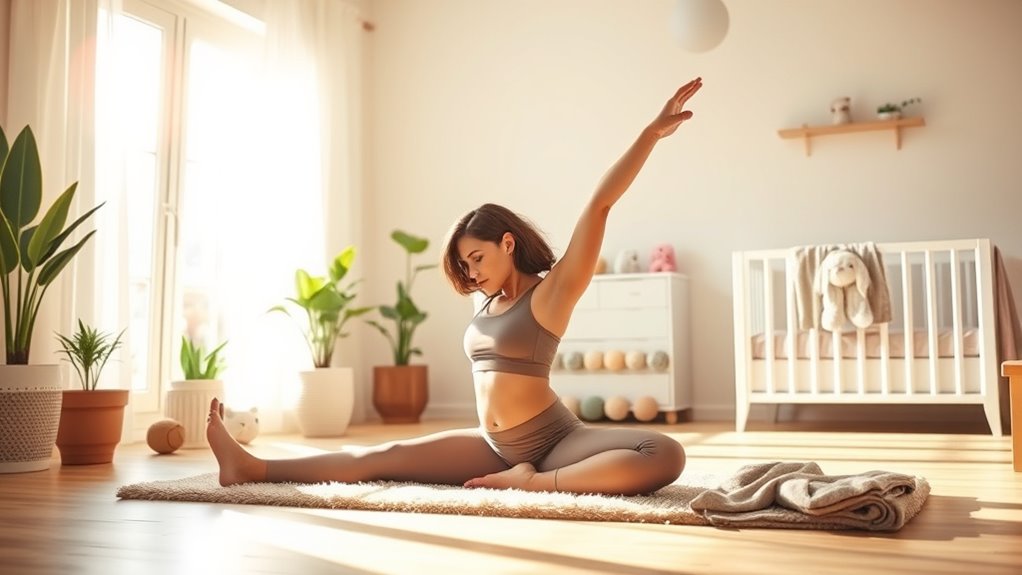

After having a baby, focus on gentle, targeted exercises to rebuild your core and strengthen your pelvic floor. Start with simple moves like pelvic tilts, deep breathing, and modified planks to support recovery and improve posture. Gradually incorporate pelvic floor exercises, like Kegels, to regain control. Remember to listen to your body, keep workouts short, and prioritize healing. Continuing this approach can help you safely regain strength and confidence at home.
Key Takeaways
- Begin with gentle core and pelvic floor exercises, such as pelvic tilts and Kegels, to rebuild strength safely.
- Prioritize proper posture and breathing techniques to support healing and reduce strain.
- Avoid intense workouts initially; gradually increase activity as your body recovers and strength improves.
- Use supportive tools like postpartum belts if recommended by healthcare providers to aid recovery.
- Practice patience and consistency, focusing on core stability and pelvic health before resuming high-impact exercises.

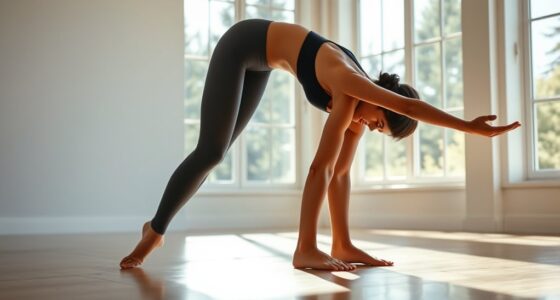
After giving birth, returning to fitness at home can be a safe and effective way to regain strength and energy. As a new mom, your body needs gentle, targeted activities to rebuild core muscles and strengthen your pelvic floor. Starting with simple core exercises helps restore stability and supports your back as you adjust to caring for your baby. Focus on gentle movements that activate your deep abdominal muscles without putting too much strain on your body. Planks, for example, can be modified to reduce pressure on the abdomen, while pelvic tilts are great for engaging your lower core and easing back tension. These exercises not only rebuild your core but also improve posture, which can suffer during pregnancy and delivery.
Equally important is strengthening your pelvic floor, which undergoes significant stress during pregnancy and childbirth. You might notice some urinary leakage or a feeling of heaviness—these are common signs that your pelvic floor needs attention. Incorporating pelvic floor exercises, such as Kegel exercises, into your routine can help restore muscle tone, improve bladder control, and prevent future issues. To perform a Kegel, simply tighten the muscles you’d use to stop urinating and hold for a few seconds before releasing. Start with a few repetitions and gradually increase as your muscles become stronger. Consistency is key; doing these exercises daily ensures steady progress and helps you regain confidence in your pelvic health.
Additionally, understanding Free Floating concepts related to postpartum recovery can help you approach your fitness journey with a holistic mindset.
As you progress, it’s essential to listen to your body and avoid rushing into intense workouts. Restoring core strength and pelvic health is a gradual process, so patience is crucial. Incorporate breathing techniques and gentle stretches to promote relaxation and reduce tension. Remember, your body has undergone significant changes, and giving yourself time to heal is important. You can also use supportive tools like a postpartum support belt if needed, but always consult with your healthcare provider before adding new exercises or equipment.
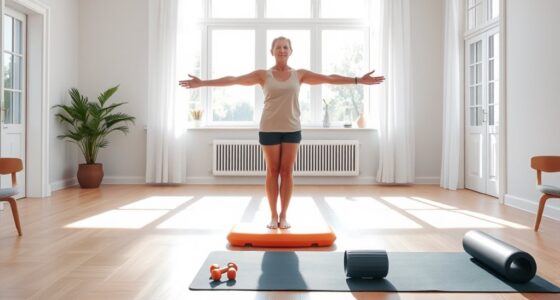
Returning to fitness at home allows you to tailor your workouts to your schedule and comfort level. Keep your sessions short and focused, emphasizing quality over quantity. As your strength improves, you can gradually introduce more challenging moves, but the foundation must always prioritize pelvic health and core stability. With consistency, patience, and care, you’ll find yourself feeling stronger, more energized, and ready to embrace this new chapter with confidence.
Frequently Asked Questions
When Can I Start Exercising After a C-Section?
You can typically start gentle exercises about six weeks after your c-section, but always check with your doctor first. Focus on pelvic floor exercises to rebuild strength and help prevent postpartum depression. Avoid high-impact activities until your doctor clears you. Listen to your body, and don’t rush, as proper recovery is key. Gradually reintroduce movement to stay safe and support your overall postpartum health.
Are There Specific Exercises for Diastasis Recti?
Yes, there are specific diastasis recti exercises designed to help you heal. Focus on gentle core strengthening, like pelvic tilts, modified planks, and deep abdominal contractions. These exercises avoid putting too much pressure on your abdominal wall. Always listen to your body, and consult your healthcare provider before starting new routines. Consistently practicing these diastasis recti exercises can help you regain core strength safely.
How Do I Know if I’M Overexerting Postpartum?
Feeling like you’re overexerting? You’ll notice persistent fatigue, dizziness, or pain, especially in your pelvic area. During breastfeeding, listen to your body—don’t push through discomfort. Prioritize pelvic floor health by avoiding high-impact or intense exercises early on. Rest when needed, and gradually increase activity. Remember, your body’s healing takes precedence; overdoing it can hinder recovery and breastfeeding success. Always consult your healthcare provider if unsure.
Can I Do High-Impact Workouts While Breastfeeding?
Yes, you can do high-impact workouts while breastfeeding, but focus on protecting your pelvic floor and strengthening your core. Make sure to listen to your body, avoid overexertion, and stay hydrated. Incorporate exercises that support pelvic stability and core strength, like gentle jumps or modified cardio, while monitoring how your body responds. Consult your healthcare provider if you experience discomfort or unusual fatigue.
What Are Signs I Should Stop Exercising Postpartum?
You should stop exercising immediately if you notice persistent pelvic floor pain, heavy bleeding, or dizziness. Pay close attention to your fatigue levels; if you feel overwhelmingly exhausted or short of breath, it’s a sign to rest. Also, if you experience any pelvic discomfort or unusual symptoms, pause your workout and consult your healthcare provider. Prioritize your recovery and heed your body’s signals to ensure safe postpartum fitness.
Conclusion
Getting back in shape after your baby is a journey filled with challenges and triumphs. While your body heals and adapts, remember that strength comes not just from workouts, but from patience and self-love. Just like caring for your newborn requires tenderness, so does rebuilding your fitness—gentle, consistent, and filled with hope. Embrace the process, knowing that your resilience is the greatest workout of all. Soon, you’ll see progress as beautifully as your bond with your little one.